Back
Back All articles

We reviewed the WEF 2025 Future of Jobs report so you don’t have to. The report highlights major changes in the global job market driven by technology, demographics, and climate concerns. Key trends are reshaping industries and the skills needed for success. While 92 million jobs are projected to be displaced, the report forecasts the creation of 170 million new roles, leading to a net gain of 78 million jobs. In Africa, this is a critical moment, with AI, automation, and renewable energy expected to have a big impact. Africa has the potential to leapfrog existing, potentially outdated, systems and create new drivers for economic growth.
However, it's crucial to have a comprehensive understanding of how these worldwide trends will manifest in the African context. With this information, we can strategically position ourselves to take advantage of new opportunities, minimize any obstacles, and come up with strategies to narrow the gap and compete favorably as a continent during this transition. Let us dive in.
Key Global Trends: What’s Changing?
The WEF report sheds light on several global shifts that are influencing the employment landscape. Among these, three stand out: demographic shifts, the rising cost of living, and climate change. These interconnected trends present a spectrum of challenges, but also, opportunities for accelerated job creation across African economies.
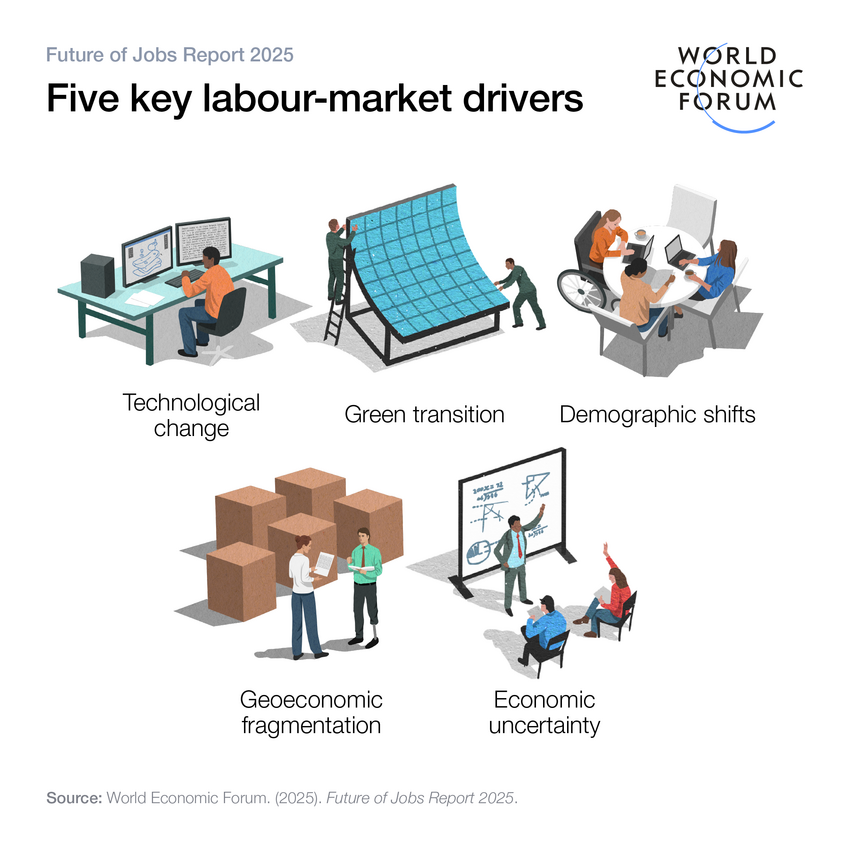
Demographic Shifts: The global workforce is undergoing a significant demographic divergence. While higher-income nations face aging and shrinking populations, many African countries are experiencing a youth demographic boom, with an average age of 19. This presents a unique opportunity. For example, countries like Niger, Uganda, and Chad, with their exceptionally young populations, with an average of 15.1, 16.1, and 16.4 years, respectively, hold immense potential for economic growth, provided that these individuals are equipped with relevant and future-proof technological skills. This requires strategic investment in education and training programs that align with emerging industry demands.
Cost of Living: The increasing cost of living is identified as a major transformative trend, with approximately 50% of employers expecting its impact on their operations by 2030. Even with projected global inflation moderation, the cost of living remains a big concern. This trend is particularly noticeable in urban centers across Africa, where rising living expenses can increase social inequalities and fuel demand for jobs that provide sustainable livelihoods. Addressing the issue requires policies that promote fair wages and affordable access to essential goods and services.
Climate Change: Climate change is a critical driver of change, fueling the demand for green jobs across sectors like renewable energy, environmental conservation, and sustainable agriculture. Approximately 47% of employers expect climate change mitigation to transform their businesses. This transformation will manifest in several ways: increased investment in renewable energy infrastructure, the development of new technologies for carbon capture and storage, and the implementation of sustainable agricultural practices.
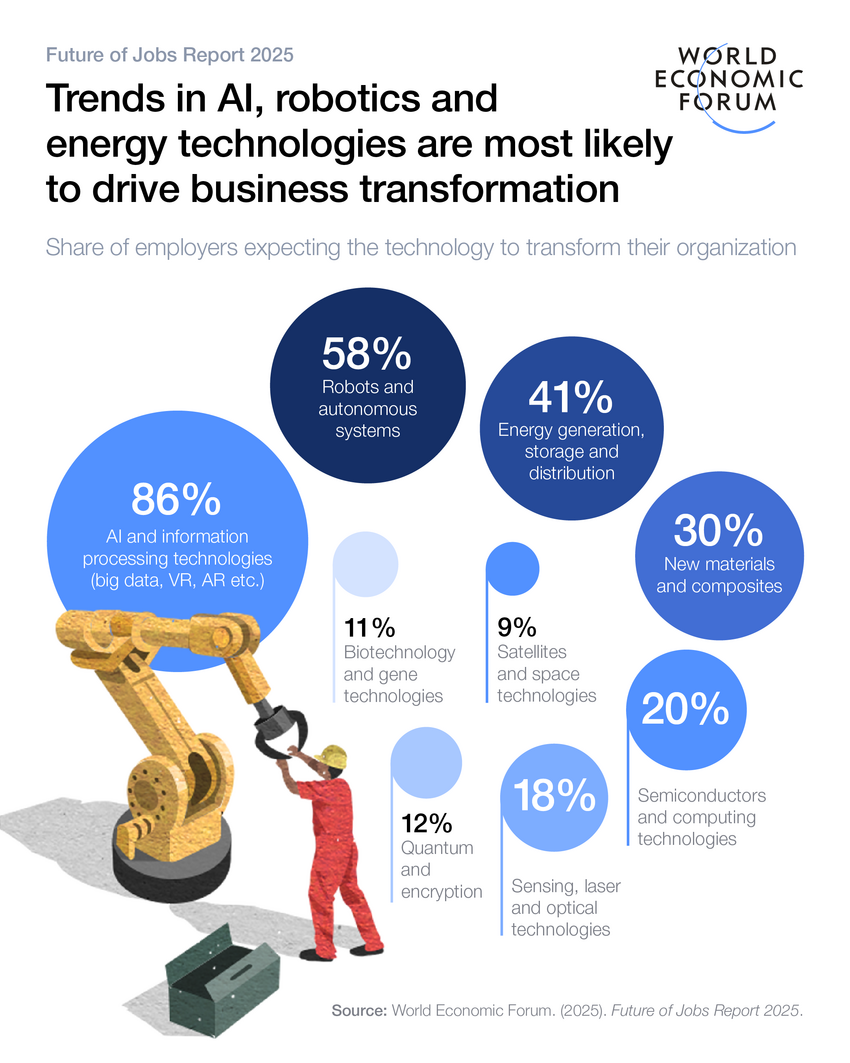
These changes will require a workforce skilled in areas such as environmental engineering, data analysis for climate modeling, and sustainable resource management. This highlights the link between job creation and environmental sustainability, stressing the need for a transition towards a green economy.
An African Outlook
Building on the WEF report's forecast of global shifts, we see a clear trajectory for specific industries in Africa. The healthcare sector, driven by demographic changes and increased demand, is poised for significant expansion. Similarly, the renewable energy sector, particularly solar and wind, presents a massive opportunity. As the African Development Bank notes, we could generate over 300 GW (gigawatts) of renewable energy by 2030, positioning Africa as a global leader in sustainable energy. This is not just about 'going green'; it's about building a whole new economy, creating jobs in installation, maintenance, and innovation. Think about it: that's a whole new wave of entrepreneurs and skilled workers needed, which ties directly into the 'climate change' job creation.
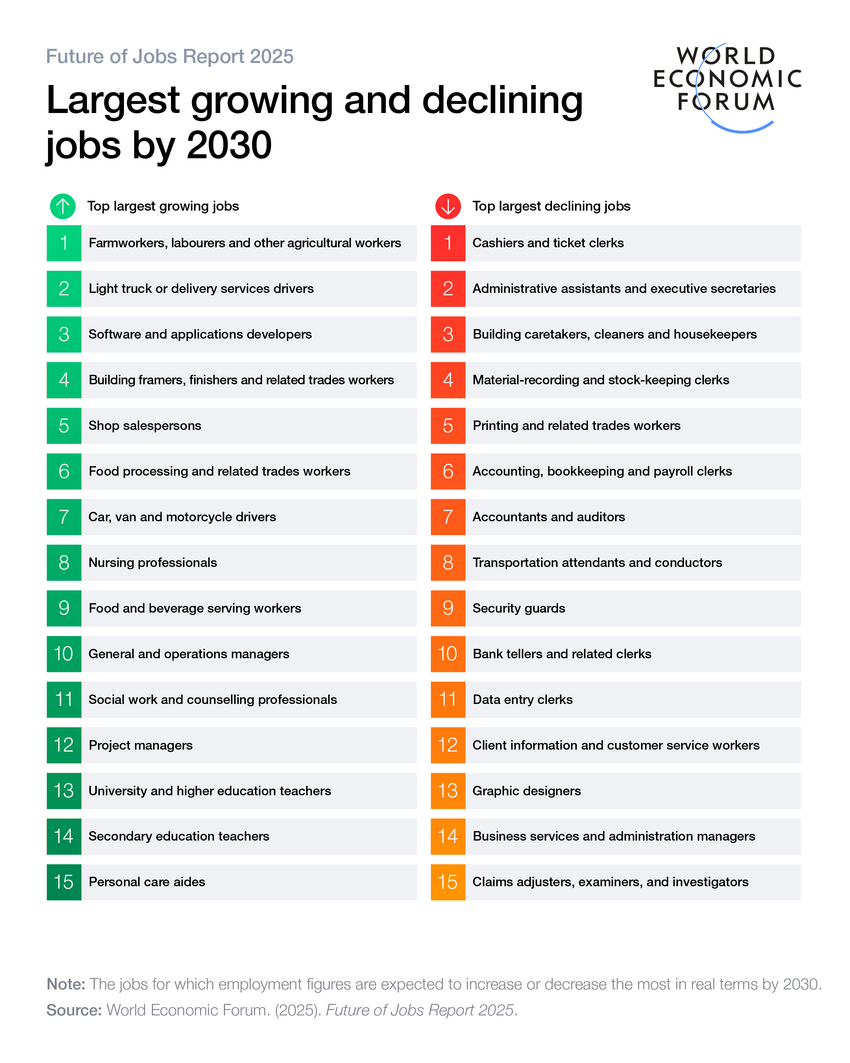
The tech industry is booming, but a skills gap threatens youth inclusion. Traditional clerical and manual labor roles face the risk of automation-driven redundancy, with the report predicting a potential 8% global job displacement by 2030. Reskilling, especially in fields like solar tech, is key to a smooth workforce transition. The skills gap, driven by misaligned education systems, significantly hinders growth, with 60% of employers struggling to find qualified talent. Strategic, future-focused industry-education partnerships are vital, especially in fast-evolving fields like solar energy and green tech.
Limited internet access in rural areas and policy gaps limit innovation, opportunities for remote work, and solar investment. As Africa’s population nears 2.5 billion by 2050, future-focused education and training is key. To harness this demographic boom, we must close the skills and infrastructure gaps.
The Big Shifts: What’s Coming, and Why?
The gig economy is changing how people work in Africa. It offers flexible jobs that attract young people, but many of these jobs don’t come with benefits or job security. There’s a chance to fix this by creating clear rules that protect workers without taking away flexibility. AI and machines will take over some tasks, which could lead to job losses as well as new ones—as many as 170 million jobs. But they can also help people do better work by handling manual, often boring or repetitive tasks. That means we need to train people for new, creative jobs that machines can’t do.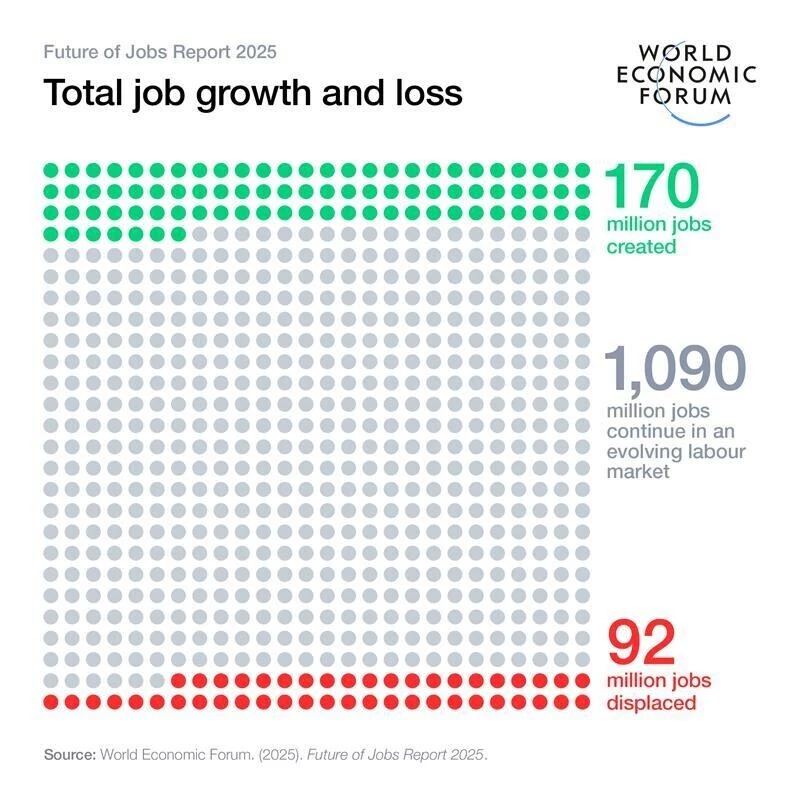
We may see more informal work formalized, offering necessary protections for gig workers and potentially increasing their earning potential. Moreover, as remote work becomes more prevalent, urban areas might see a decline in their competitive edge as rural workers gain access to opportunities previously limited to city dwellers. Job seekers should focus on building skills in critical thinking, adaptability, and, beyond coding, understanding how tech shapes industries. Soft skills like communication remain essential. Continuous learning is key to staying relevant in a fast-changing job market.
Future-Proof Yourself
To succeed in the changing job market, we must keep learning through online courses and community resources. Gig workers should build a strong online presence and have multiple income sources. It’s important to assess our skills and learn what’s in demand. Governments, businesses, and education should work together to meet market needs. The future of work in Africa depends on our proactive approach to growth and opportunity. To read more such insights, check out LOOKA's consumer insights repository.