Back
Back All articles

We have seen a product launch that flops, an African marketing campaign that misses completely. Budgets drained on strategies that missed, these aren’t just business misfortunes, but rather a direct outcome of research gaps. Sometimes it’s skipping research entirely, other times, it’s assuming insights from one market automatically apply to another. In African markets, this second mistake is just as costly as the first.
Most conversations about failed market research focus on companies that skip research altogether, like the beverage brand launching without understanding customers, the tech startup wasting budget on the wrong channels, the gym missing emerging trends. But there’s another silent killer: applying solid research from one market to a completely different context.
Two Markets, Two Realities
South Africa and Nigeria are both African powerhouses. On paper, they appear similar, characterized by young populations, growing middle class, and increasing digital adoption. But dig deeper, and the differences are stark. South Africa has a mature, formal market with 80% of its citizens having bank accounts; 60% own cards. Shopping occurs in modern retail, with efficient supply chains. The consumers have higher disposable income and respond to brand-led marketing, loyalty programs, and credit offers.
Nigeria on the other hand has a high-growth, informal economy with more than half the population unbanked with cash dominating. Retail there is fragmented as there are traditional markets and kiosks, less malls. Consumers are extremely price-sensitive and as such, they buy smaller pack sizes and budgeting daily.
As seen, surface similarities may mask profound differences. A South African-inspired mobile money campaign in Nigeria isn’t a creative problem, rather it’s a context problem.
The Pattern
Poor market research usually shows up in one of two ways and both can be extremely costly ;
1. Skipping research altogether
Some companies jump straight into a launch or campaign without really understanding their audience. The result? Products that people don’t want, marketing messages that miss the mark, and strategies built entirely on assumptions. Think of it like trying to navigate a city without a map, while you might move quickly, but you’ll likely end up lost.
2. Applying research from the wrong context
Even when research is done, it can go wrong if it’s assumed that insights from one market automatically work in another. For example, a financial product designed for a population where most people have bank accounts may completely fail in a cash-driven economy. Retail strategies built for large malls won’t connect in neighborhoods dominated by small kiosks and traditional markets. Premium pricing might resonate with higher-income consumers in one country but turn off buyers in a more price-sensitive market.
Both of these mistakes cost companies millions in wasted time, resources, and missed opportunities, but the good news is, they’re entirely preventable with the right approach.
What Actually Works
Effective research is about understanding each market on its own terms. Every market should be studied independently, without assuming insights from one context will transfer to another. Beyond demographics, it’s essential to grasp the underlying infrastructure, payment systems, and retail realities that shape consumer behaviour. For example, in South Africa, roughly 78.9 % of the population uses the internet, reflecting more developed digital infrastructure that supports formal banking and e‑commerce strategies. In contrast, while Nigeria leads Africa in total internet users by number, connectivity still varies widely and quality can be uneven, especially outside urban areas, meaning online strategies must account for accessibility challenges.
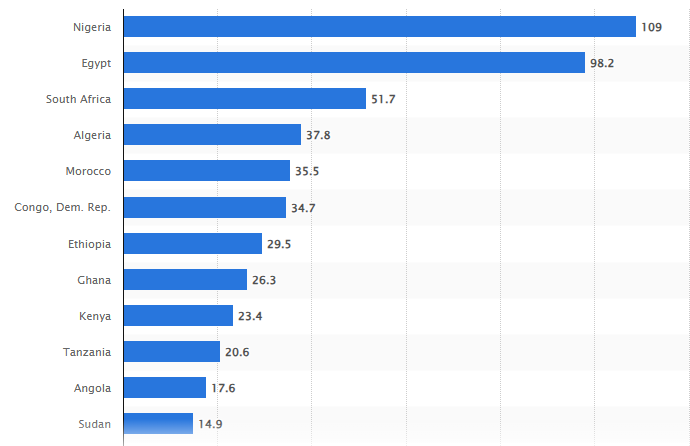
Meanwhile, financial inclusion varies significantly across the continent: South Africa and Ghana both report over 80 % of adults with formal financial accounts, but many countries including Nigeria, remain well below this level, with overall inclusion in Sub‑Saharan Africa at about 58 % of adults owning an account according to the latest Global Findex data.
Financial assumptions should be tested locally, pricing and payment models adapted, and actual behavior mapped to understand where people shop, how they make purchases, and who influences their decisions. Cultural dynamics and communication styles must also be validated, as trust and messaging vary widely across markets, and reliance on channels like community networks and word‑of‑mouth can strongly shape purchase behavior in many African markets (research shows word‑of‑mouth significantly impacts consumer choices in Nigeria).
Stop Flying Blind
Even the best research in one market can become the worst strategy in another. Geographic proximity or similar development indicators don’t guarantee similar consumer realities. In Africa, context is the difference between data that guides decisions and data that misleads. Stay ahead of the curve and discover how to uncover actionable, market-specific insights, let’s chat and explore what works for your business.