Back
Back All articles

By 2040, the story of work in Africa won’t be written in spreadsheets; it will be lived in home offices, farmlands, data centers, and digital classrooms. It will be shaped by a generation that’s redefining what meaningful, secure, and dignified work looks like. To understand that future, LOOKA Research spoke to the people who are shaping it.
What We Did
We conducted 600 in-person interviews in Kenya, Nigeria, and South Africa, blending urban (e.g., Nairobi, Lagos, and Johannesburg) and rural communities to reflect both the formal and informal economies. We spoke with salaried workers, side hustlers, students, self-taught coders, and farmers, capturing their career paths, hopes, concerns, and how they interpret key trends like AI, migration, and education. Below are the insights we uncovered.
Patterns, Tensions, and Turning Points
1. A Job Market in Transition, Not Decline
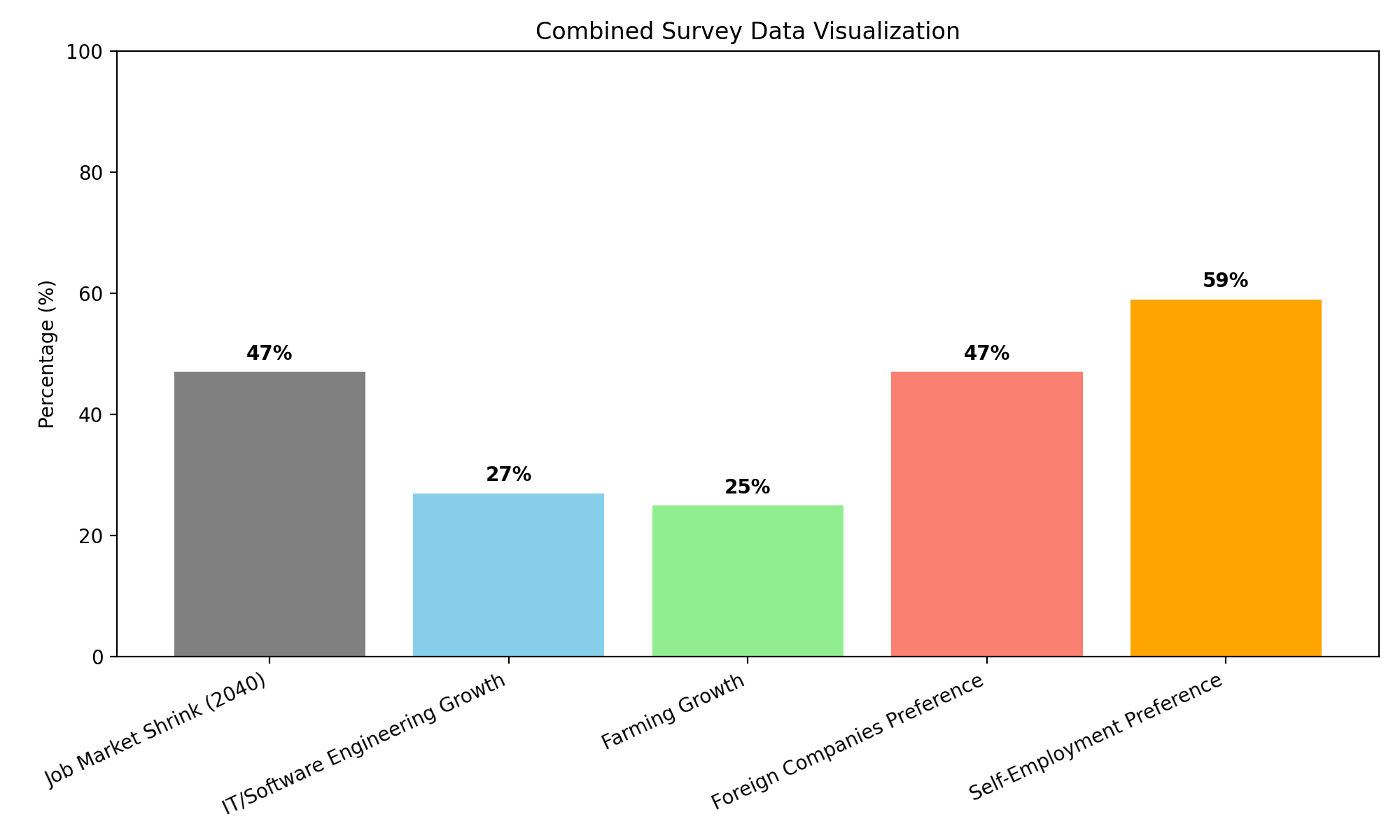
While 47% believe job opportunities will shrink by 2040, most don’t see that as an end; rather, a shift. Sectors like IT/software engineering (27%) and sustainable agriculture (25%) are seen as the future, with climate change pushing a return to tech-driven farming across all three countries. Interestingly, South Africans were the most skeptical, while Kenyans expressed more optimism, particularly among youth in rural areas experimenting with mobile-based microbusinesses.
2. Degrees Are Losing Their Grip
Across all countries, a strong mismatch exists between formal education and employment. Though 54% say their education aligns with their work, the remaining half feel left behind by outdated curriculums. In Nigeria, this disconnect is most pronounced; the youths are pivoting toward vocational skills, online certifications, and digital entrepreneurship. In Kenya, there’s growing demand for boot camps and tech hubs, while South Africa still values degrees, but with rising skepticism about their ROI.
3. Entrepreneurship Isn’t Plan B Anymore
The gig economy is not just surviving in Africa, it’s maturing. With 59% of respondents preferring self-employment, side hustles are evolving into fully fledged businesses.
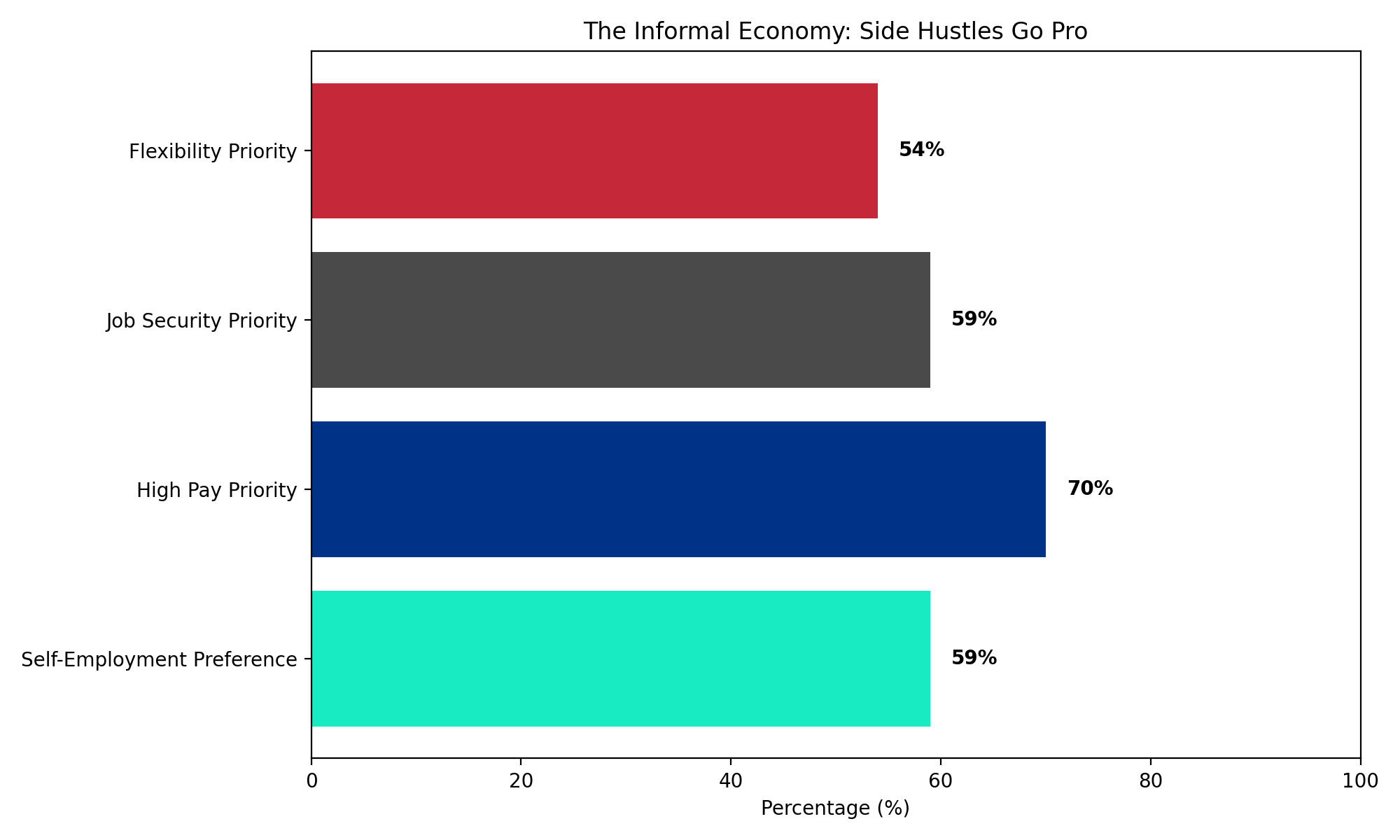
In rural Kenya and Nigeria, young people are monetizing everything from solar-powered phone charging stations to agritech consulting. Meanwhile, urban South Africans are tapping into global freelance markets but are also calling for regulatory support to make informal work sustainable.
4. AI and Automation: A Threat and Opportunity
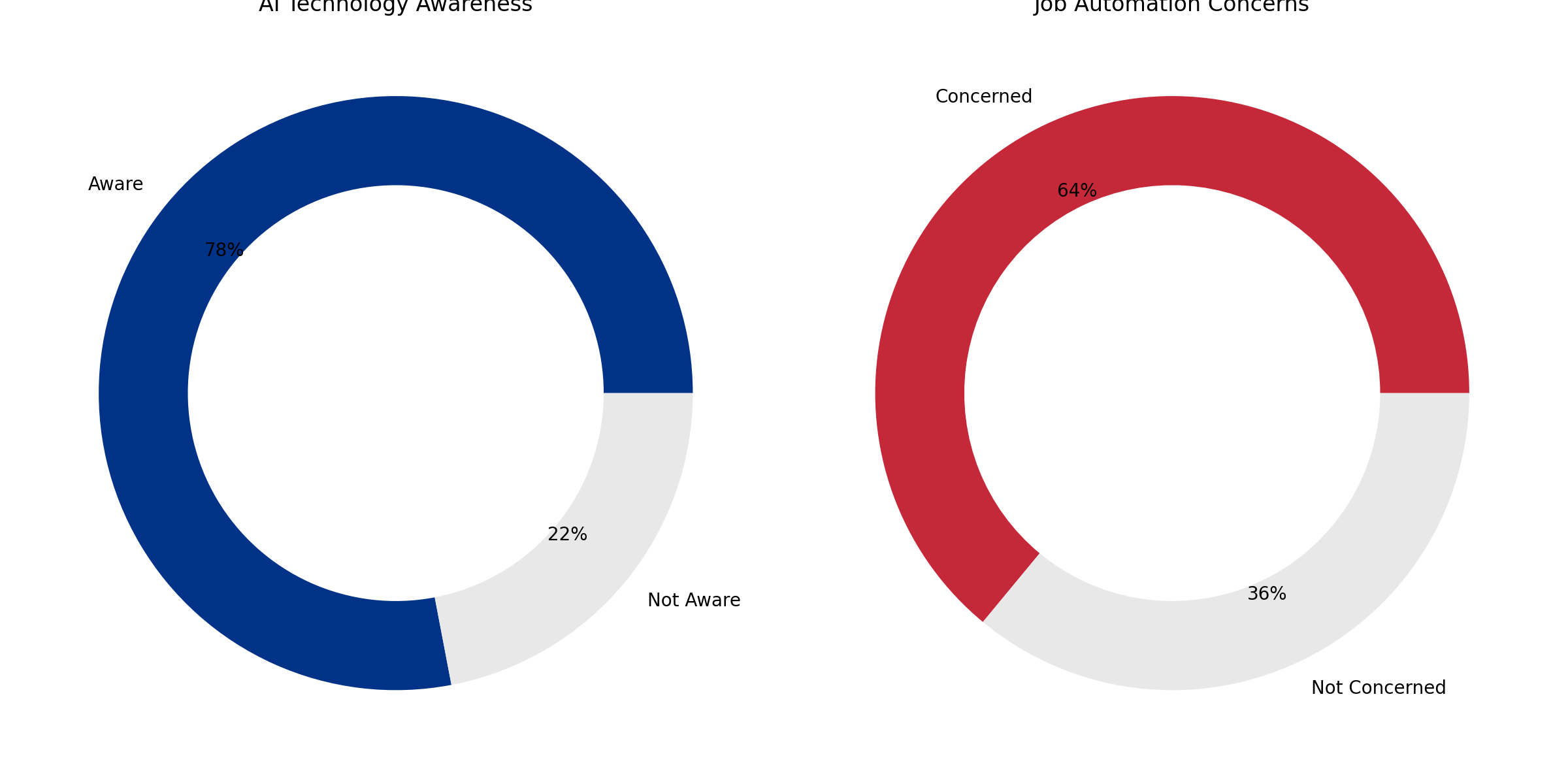
Yes, 64% are worried about automation. But not in a passive way. Across the board, respondents, especially in urban Kenya and Nigeria, see AI as a tool for innovation, not just a job-killer. There’s strong interest in data labeling, content creation, e-learning platforms, and low-code app development. But respondents flagged a major gap in accessibility and affordable skilling opportunities.
5. Urban Desirability, Rural Potential
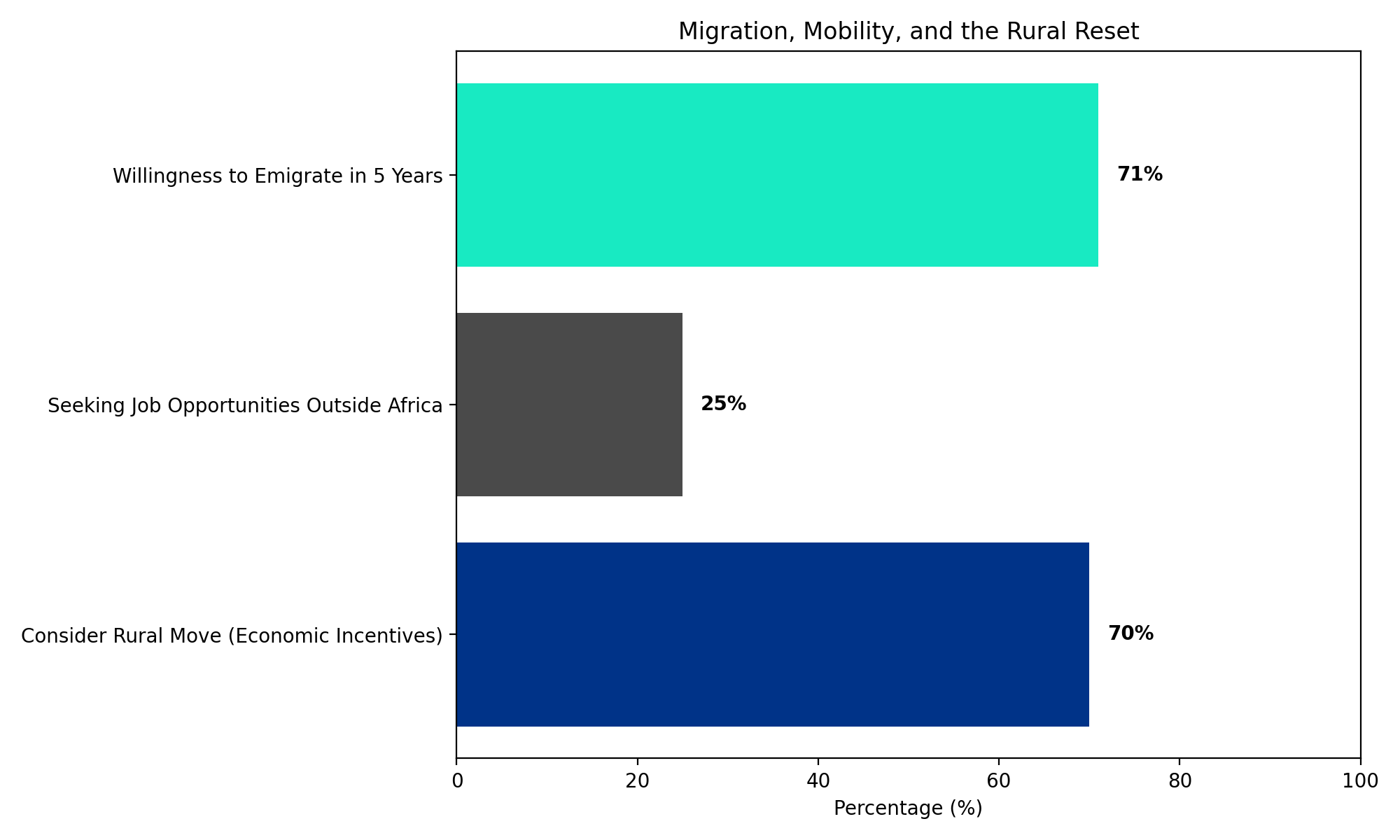
Despite 71% saying urban life is superior, nearly 70% said they’d move to rural areas if economic incentives were offered. This “rural reset” is strongest in Kenya, where connectivity and solar energy are enabling new work models. In Nigeria, rural areas are still seen as underserved, while South Africa shows growing interest in rural tourism and sustainability ventures.
6. Migration is an Escape and a Mirror
71% said they’d leave Africa if they had the chance. This isn’t about disloyalty; it’s about frustration. Those with fewer educational qualifications are most eager to migrate, often citing poor infrastructure, insecurity, and limited opportunities.
However, South African respondents showed a stronger inclination to stay local if decent work is guaranteed.
7. Inequality Remains the Elephant in the Room
Young people, rural dwellers, and women consistently reported fewer opportunities and greater exclusion. In all three countries, women expressed higher barriers to tech jobs, with many calling for mentorship and gender-inclusive skilling programs. Youth in rural Nigeria and South Africa repeatedly flagged lack of access to digital tools as a top constraint.

Zooming Out: 3 Countries, One Tipping Point
South Africa, Kenya, and Nigeria are taking different routes into the future of work, but they’re facing the same crisis. South Africa boasts a more structured labor market but continues to battle deep-seated inequality. Kenya’s youthful population is a powerful asset, though the scale and informality of its economy make stability unstable. Nigeria, rich in human capital, faces persistent governance and infrastructure challenges that threaten to stall its momentum In all three countries, the future of work is focused on four key priorities:
- Education that works: we need to invest in practical, digital, and flexible. Systems must evolve beyond degrees to build real-world readiness.
- Policy support for the informal and gig economy, recognizing its role not as a backup but as a backbone.
- Digital infrastructure in rural areas, to unlock latent potential and ease the pressure on overcrowded cities.
- Genuine inclusion, not as a tagline, but through real investment in young people, women, and overlooked communities.
So, what’s the opportunity? We believe it lies in pan-African cooperation, bold investments in digital skills, green jobs, and tech ecosystems that can help the continent leapfrog rather than lag. But here’s the real challenge: what will you do with this insight? Will you help build infrastructure that keeps people rooted, design jobs that reflect real-world realities, not just degrees, or support the rise of local innovation over imported solutions?