Back
Back All articles
Cross-border payments in Africa are becoming increasingly seamless, driven by a growing variety of options serving both individuals and businesses. In Kenya, this progress is evident in the diverse channels available for international transfers from regional bank systems to global money transfer operators like Western Union and WorldRemit. Mobile
Cross-border payments in Africa are becoming increasingly seamless, driven by a growing variety of options serving both individuals and businesses. In Kenya, this progress is evident in the diverse channels available for international transfers from regional bank systems to global money transfer operators like Western Union and WorldRemit. Mobile money platforms such as M-Pesa Global and Airtel Money have further simplified these transactions, while online payment gateways like Flutterwave and Pesapal are helping Kenyan businesses participate more actively in global trade.
With over $150 trillion in global cross-border transactions in 2022 and an estimated total addressable market (TAM) of $194.6 trillion in 2024, this sector continues to play a pivotal role in international commerce and economic growth. To better understand these trends at the consumer level, LOOKA Research, conducted a nationwide survey in Kenya engaging trained surveyors, who carried out 600 validated interviews across the country. This data collection focused on individuals’ experiences with both local and international payments, uncovering key behavioral patterns around mobile money usage, remittance flows, and preferred transfer channels.
The Evolving Expectations
What stood out from the insights is the 68% of those surveyed had never made or received an international transfer. That's a big significant gap and it points to untapped potential as cross-border payments continue to evolve with new technologies, regulations, and growing demand. Whether for personal, business, or government use, these payments need to be both effective and accessible across multiple currencies and locations.
Who’s Sending Money Abroad and What’s Driving Them?
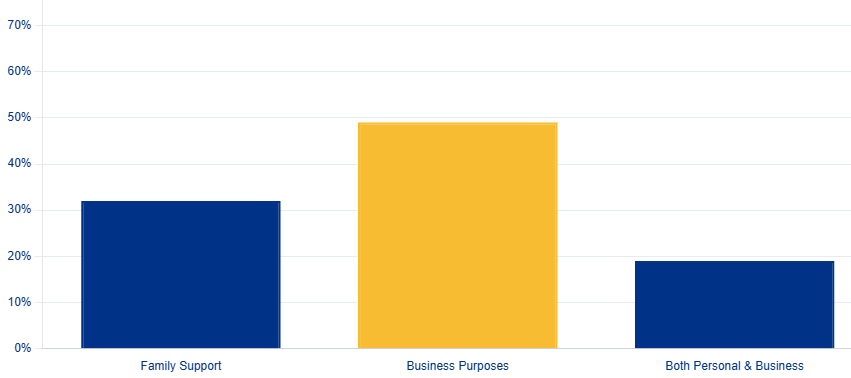
A solid 32% of people are sending money overseas to support family members, proof that family ties remain strong regardless of distance. But there's another important group making waves and that’s the 49% that are using cross-border transactions to support their businesses. Nearly half of senders actively boost their economic ventures through international payments. Then there's the 19% who blend both worlds, sending money for personal and business needs. It's a reflection of how dynamic and interconnected modern life has become.
How Remittances Keep Families Going
On the other hand, the reasons for receiving money paint an equally compelling picture. The majority, that is 56%, said they receive money primarily for family support. It's a reminder of how critical cross-border payments are as a lifeline for many households, especially when family members are working or studying abroad. Business transactions account for 22% of remittances received, while 21% said they receive money for both business and family-related reasons.
Popular Destinations?
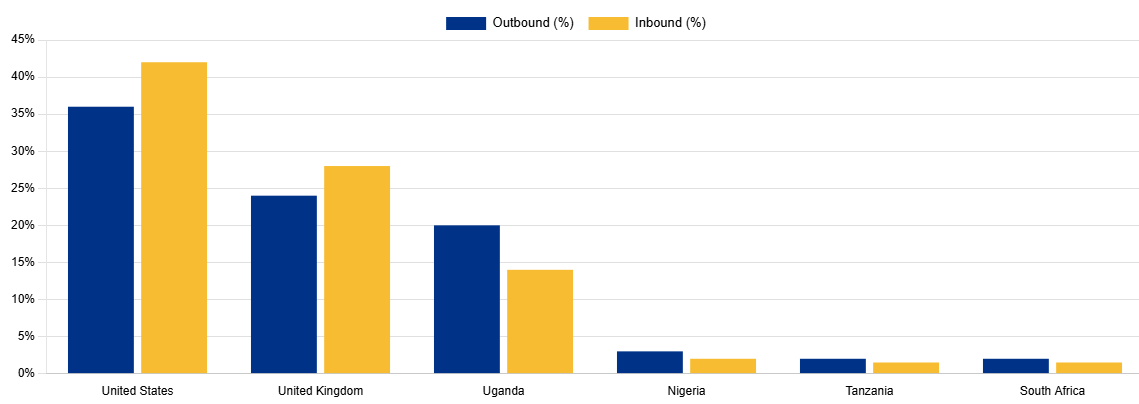
So where is the money actually moving? The United States dominates both sending and receiving with 36% of money sent abroad goes to the U.S., and 42% of money received comes from there. The United Kingdom follows closely, accounting for 24% of outbound transfers and 28% of inbound remittances.
Within Africa, Uganda stands out. Kenyans send 20% of their money to Uganda and receive 14% in return, signaling a thriving regional financial relationship. Nigeria, Tanzania, and South Africa also feature prominently, underscoring the dynamic nature of intra-African cross-border exchanges.
Family vs. Business
One of the most interesting findings yet, is the divide between family and business remittances. Nearly half (49%) of participants send money overseas for business purposes, showing just how integrated businesses have become in the cross-border payment ecosystem. But on the receiving end, family support dominates with 56% of all money received is for personal or household needs.
Moving forward
Cross-border payments in Kenya serve a dual purpose, that is, fueling business growth while supporting families. As more entrepreneurs expand globally, reliable and accessible payment systems are becoming vital for both commercial and personal transactions. The market is rich with opportunity, but understanding user preferences and motivations will be key to driving adoption and sustainable growth. Educating users on transaction security and benefits will further unlock this potential. For businesses, the takeaway is adapting to these evolving trends can open doors to new services, enhanced customer satisfaction, and stronger global connections.
Want the full story? [Click here] to access the complete research.